Health and Safety Policy — House Clearance Tufnell Park
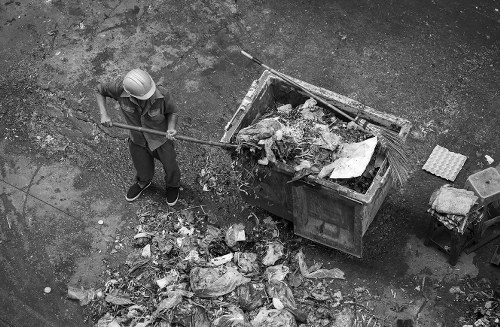 Scope and purpose: This Health and Safety Policy sets out the standards and procedures our house clearance service adopts for safe, compliant, and efficient operations across our rubbish removal and clearance activities. It applies to all employees, contractors and anyone working on behalf of the clearance company, whether carrying out household clearances, waste removal, or bulky rubbish collection. The policy aims to protect people, property and the environment while delivering a professional house clearance service in the designated service area.
Our commitment is to maintain a safe workplace by identifying risks, implementing controls and ensuring that every removal or clearance task is planned and supervised. We emphasise prevention, continuous training and clear communication so that manual handling, hazardous materials, and vehicle operations are managed effectively. This policy complements statutory obligations and good practice for waste handling and responsible rubbish company operations.
 Responsibilities: Management is responsible for ensuring risk assessments are conducted, controls are in place and adequate resources are provided for safe house clearance projects. Staff and operatives have a duty to follow safe systems of work and report hazards. Subcontractors must comply with the same safety standards and provide evidence of competence. Strong supervision and documented handover procedures are required for every site.
The company will maintain written risk assessments for typical scenarios encountered by a house clearance team, such as multi-room clearances, loft and basement removals, and garden clearance. Risk assessments will identify potential issues including asbestos, sharps, liquids, mould, pests and heavy/bulky items. Controls will include the use of appropriate personal protective equipment (PPE), signage, and safe access routes for carrying out rubbish collection and waste removal tasks.
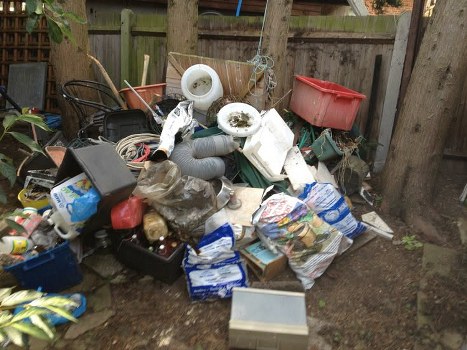
Training and competence
Training programmes will be provided to ensure staff are competent in manual handling techniques, identification of hazardous waste, safe use of tools and equipment, and vehicle loading and securing. Staff will receive induction training and periodic refresher courses. Competence records will be maintained and reviewed. Only trained personnel will be authorised to handle hazardous materials or to operate mechanical lifting aids.Personal protective equipment and clothing
The company will supply suitable PPE, including high-visibility clothing, gloves, respiratory protection where needed, safety footwear and eye protection. Workers must use PPE correctly and report any defects. PPE selection will be task-specific and informed by risk assessment; for example, chemical-resistant gloves for potential liquid waste and puncture-resistant gloves for handling sharps or demolition debris.Safe lifting and manual handling procedures form a central part of the policy. Staff will be trained to assess load weight, use team lifts or mechanical aids for bulky items and use correct posture to prevent musculoskeletal injury. Items such as furniture, appliances and packed bags of general rubbish must be assessed before lifting and, when safe, manoeuvred through protected routes to avoid slips, trips and falls during clearance operations.
 Hazardous materials and waste segregation: When hazardous materials are encountered — including paint, solvents, asbestos-containing items, batteries, fluorescent tubes and medical waste — operations will stop and the incident will be managed according to the hazardous waste procedure. Waste will be segregated into appropriate containers for recycling, hazardous disposal and general landfill-compliant removal. The company will adhere to waste transfer documentation and safe containment standards.
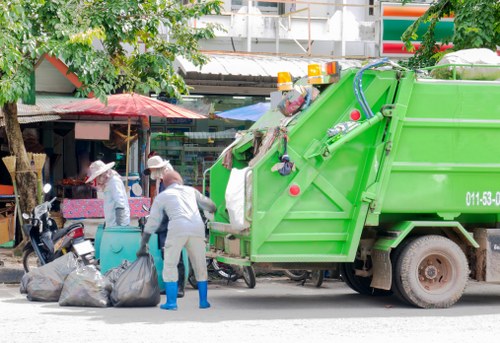 Vehicle and site safety: Vehicles used for removals will be inspected daily, loaded safely and secured to prevent shifting. Drivers must comply with applicable road safety rules and vehicle weight limits. On-site, the team will establish exclusion zones when loading bulky items and use safe access points for vehicle approach. Secure storage of tools and safe disposal of small items are required to reduce site hazards and environmental contamination.
Emergency procedures and first aid provision are maintained for all clearance operations. A minimum number of trained first aiders will be available, and a first aid kit provided in vehicles. Emergency contacts and procedures (evacuation routes, reporting mechanisms and immediate containment steps) will be part of operational briefings before starting work. In any serious incident, activities will be halted until safe to continue and appropriate emergency services notified.
Incident reporting, investigation and continual improvement: All accidents, near misses and dangerous occurrences must be reported promptly. The company will investigate incidents to identify root causes and implement corrective actions to prevent recurrence. Records of investigations, risk assessments and training will be retained and reviewed periodically as part of our monitoring process for the rubbish removal service.
Monitoring, review and policy ownership: This Health and Safety Policy is reviewed at least annually, or more frequently when there are changes in operations, new hazards or after an incident. Management retains overall responsibility for enforcing this policy, and supervisors must ensure compliance during every house clearance, bulky waste collection or disposal task. The policy is an integral part of our service commitment and supports safe, lawful, and ethical clearance work across our service area.